UK Gambling Commission Bank Data Study Finds Illegal Gambling Runs Alongside Licensed Play, Not Instead of It
A Gambling Commission analysis of open banking data found 91% of repeat illegal-site users kept gambling with licensed operators, with no clear shift away.
The Gambling Commission, Great Britain's gambling regulator, published a study on 28 October 2026 that used anonymised banking records to show that people who pay illegal gambling operators mostly keep gambling with licensed ones, with no substantial shift away from the regulated market after their first illegal payment. The finding cuts against a central industry argument in the tax debate: that higher duties and tighter rules push players out of the licensed market and into the black market.
The report is careful about its limits. It describes illegal transactions as typically occurring "within broader patterns of on-going legal gambling activity," but warns that its data cannot measure the size of the illegal market or prove cause and effect.
What the bank data shows
The answer, in short, is supplement rather than substitute. Of the people with repeated detected payments to illegal operators, 91% also gambled with licensed operators over the same period.
To test for switching, the Commission followed 122 people with at least two illegal transactions through the six months before and after their first one. Licensed activity held broadly steady while illegal activity spiked and then faded.
| Measure (per person, per month) | Before first illegal payment | After first illegal payment |
|---|---|---|
| Licensed gambling transactions | About 23 to 29 | About 23 to 29 (low of 19.4 in month 5) |
| Illegal gambling transactions | None detected | 4.9 in month 1, then 1.2 to 1.9 |
The regulator also found that illegal payments tend to come in runs and often sit close in time to legal gambling transactions, which suggests the same sessions or spending spells span both markets.
Who uses illegal operators
The illegal-market group is small but stands out on harm. The 179 people identified had an average age of 44, and 115 were men. Problem Gambling Severity Index (PGSI) scores, a standard nine-question screen on which 8 or more indicates problem gambling, were available for 146 of them.
| PGSI score | Illegal-operator users (n=146) | Licensed gamblers, excl. lottery-only (n=12,543) |
|---|---|---|
| 0 (no problems) | 26% | 68% |
| 1–2 (low risk) | 12% | 16% |
| 3–7 (moderate risk) | 17% | 9% |
| 8+ (problem gambling) | 45% | 6% |
The Commission says these figures are only for comparison within the sample and cannot be set against its national Gambling Survey for Great Britain.
Payments ran almost entirely through ordinary bank accounts. Current accounts carried 96% of the 3,426 illegal transactions; credit cards carried 138, or 4%, used by 15 people. Gambling on credit cards with licensed operators has been banned in Great Britain since April 2020.
How the study worked
The data came from YouGov, which collected Open Banking transactions from about 38,000 consenting panel members. The Commission bought the anonymised set, which covers 157.2 million transactions from July 2018 to July 2026, including 4.8 million licensed non-lottery gambling payments. Licensed gambling was flagged with an algorithm from payments firm Yaspa, and Warwick Business School supported the analysis.
Finding illegal operators was harder. Matching known operator names against payment descriptions returned nothing, which the Commission reads as a sign that illegal sites rarely use their own names in payment records. Instead it matched exact descriptions taken from known illegal-operator bank statements (821 transactions) and merchant names strongly suspected to be illegal operators (2,628), with 23 overlapping.
The caveats
The regulator lists several limits that matter for how far the finding can be pushed:
- The panel is not nationally representative; men are slightly over-represented and women over 55 under-represented.
- Cryptocurrency payments are not captured, and only banks that support Open Banking are included.
- Only known operators can be detected, so illegal spending through unidentified merchants is missed.
- The design "does not permit" causal analysis of illegal gambling and harm.
Because the sample covers only part of the illegal market, the Commission says it cannot use the data to estimate that market's size, in absolute terms or relative to licensed gambling.
How it fits the wider evidence
The study is the latest in a run of Commission research on illegal gambling. In September 2025 the regulator estimated that consumers in Great Britain visited about 1,000 illegal gambling websites between May 2024 and July 2025, and found "no overall increase" in engagement over that period. Two months later it said it was not yet able to reliably quantify the illegal online gambling market.
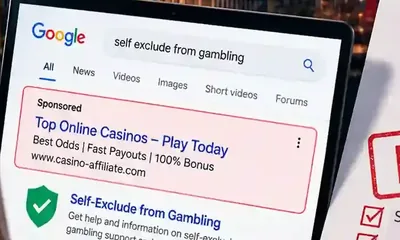
On 20 October 2026, Phase 3 of its Consumer Voice research, run by Yonder Consulting, found that seeking sites not covered by GamStop, the national online self-exclusion scheme, and sites that ask for little personal information were among the strongest predictors of illegal-site use. That links to concerns raised by GamStop passing 500,000 registrations and by this week's ASA ruling on a betting affiliate's ad shown to a self-exclusion searcher.
Independent academic work points the same way. A survey of regular gamblers by Heather Wardle of the University of Glasgow and Virve Marionneau of the University of Helsinki, funded through the Commission's Regulatory Settlement Fund, found 5.7% reported some unlicensed gambling and that heavy overall gambling involvement was linked to higher odds of using unlicensed sites.
Why it matters for the tax fight
The timing is pointed. The report landed on the day Chancellor John Healey announced a Machine Games Duty rise from 20% to 25%, when operators warned again of a black-market surge. Industry groups have long put the illegal market far higher than the regulator will: the Betting and Gaming Council's Frontier Economics study estimated £4.3 billion in annual illegal stakes, and trade reports have described UK and Dutch black markets surging.
The Commission's data does not settle that dispute, since it cannot say how many people use illegal sites or how much they spend. It does weaken the simpler version of the argument, that each player lost to the black market is a player lost to licensed operators and the Treasury. Across Europe, the same debate is running under the European Casino Association's €91.6 billion black-market figure.
Status reviewed on 30 October 2026. All study figures are from the Gambling Commission's report published on 28 October 2026; industry market-size estimates are attributed and have not been endorsed by the regulator. More regulation news and EMEA coverage.
Frequently asked questions
What did the Gambling Commission's open banking study find?
The study, published on 28 October 2026, traced 3,426 payments to illegal gambling operators made by 179 people in an anonymised banking dataset. Most of those people also gambled with licensed operators, and their licensed activity stayed broadly level after their first detected illegal payment. The regulator concluded that illegal gambling usually happens on top of ongoing legal gambling rather than replacing it.
Does illegal gambling replace licensed gambling in Great Britain?
The Commission's data does not show it. Among 122 people with at least two detected illegal transactions, licensed transactions stayed at roughly 23 to 29 per person per month before and after the first illegal payment. Illegal payments peaked at 4.9 per person in the first month and then fell to below two. The sample is small, so the finding is indicative rather than conclusive.
Where did the Gambling Commission get the banking data?
YouGov collected Open Banking transaction data from about 38,000 people who consented to anonymous research use, and the Commission bought the anonymised dataset. Records run from July 2018 to July 2026 and cover 157.2 million transactions. Licensed gambling was flagged with an algorithm from payments firm Yaspa, and the analysis was supported by Warwick Business School.
Are illegal gambling users more likely to be problem gamblers?
In the Commission's dataset, 45% of illegal-market users with a known Problem Gambling Severity Index score had a score of 8 or more, the problem gambling threshold. Among all licensed gamblers in the same data, excluding lottery-only players, the figure was 6%. The regulator stresses that the study design does not allow it to say illegal gambling causes harm.
How big is the UK illegal gambling market?
There is no official figure. The Gambling Commission says this study cannot estimate the market's size, and in 2025 it said it could not yet make a robust estimate. Industry estimates are higher: a 2024 Frontier Economics study for the Betting and Gaming Council put annual illegal stakes at £4.3 billion, a figure the regulator has not endorsed.