ASA Optival Ruling: Betting Affiliate's Search Ad Shown to Self-Exclusion Searcher Breached UK Code
The ASA upheld a complaint against affiliate Optival after its betting search ad appeared for "self exclusion bookies", breaching CAP Code rule 1.3.
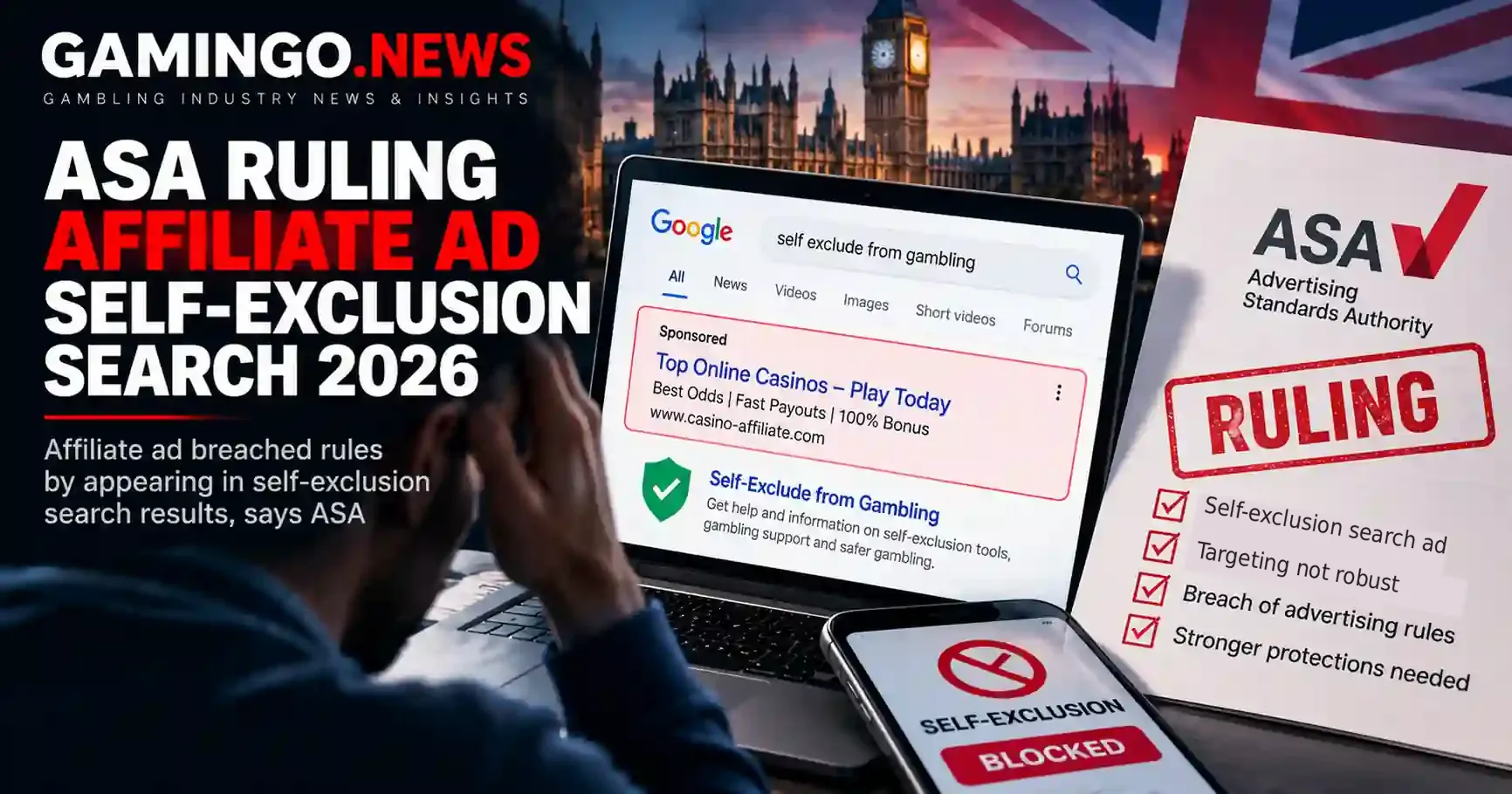
The UK's Advertising Standards Authority (ASA) ruled on 28 October 2026 that betting affiliate Optival Ltd broke the advertising code when its paid search ad for bestbookiesandbettingsites.co.uk appeared to someone searching for "self exclusion bookies". The ASA Optival ruling, reference A26-1351521, followed a single complaint and finds the ad was irresponsibly targeted.
The ASA is the UK's independent advertising regulator. It enforces the codes written by the Committee of Advertising Practice (CAP); the non-broadcast CAP Code covers paid search ads.
What the ASA decided
The complaint was upheld. The regulator found a breach of CAP Code (Edition 12) rule 1.3, the general rule that ads must be prepared with a sense of responsibility to consumers and to society.
| Item | Detail |
|---|---|
| Advertiser | Optival Ltd, trading as bestbookiesandbettingsites.co.uk |
| Medium | Paid search ad |
| Seen | 10 August, after a search for "self exclusion bookies" |
| Ad claims | "Top 15 Betting Sites UK", a first bet bonus and "the Best Welcome Bonus Offers" |
| Complaints | 1 |
| Rule breached | CAP Code (Edition 12) rule 1.3, social responsibility |
| Ruling date | 28 October 2026 |
| Outcome | Upheld; ad must not run for that search again |
Why the ASA found the targeting irresponsible
The ASA's reasoning rests on who types that query. Someone searching for "self exclusion bookies" was, in its view, likely looking for information or help to cut back on gambling, and some of those people would be vulnerable. Showing them a list of betting sites and welcome bonuses was not appropriate.
The regulator reminded advertisers that gambling ads must pay "particular regard" to protecting vulnerable people from harm or exploitation. For gambling, it expects "extremely robust controls" against inappropriate targeting.
Optival's status as a comparison site did not change the result. The ASA accepted that the company is an affiliate, not a gambling operator, but said the ad effectively promoted betting sites and bookmakers.
Optival's defense
Optival told the ASA it had never bid on the phrase. It said its search term reports showed no self-exclusion queries triggering its ads, and it supplied a Google Ads screenshot to back that up. It said it already used negative keyword lists for self-exclusion, GamStop and problem gambling terms, and blamed an isolated case of the platform's automated query matching. It also promised to widen those exclusions across all campaigns.
The ASA welcomed the planned changes but said robust measures should have been in place already. Because the ad still appeared for an obviously self-exclusion related search, it concluded there was a strong likelihood vulnerable consumers had seen it.
The remedy
The ASA ruled that the ad must not be served again after the search "self exclusion bookies", and told Optival to make sure its search ads are responsibly targeted. Rulings carry no fine; the ASA relies on publication and, for repeat offenders, CAP sanctions such as alerts to ad platforms.
A familiar problem for gambling search ads
The case closely mirrors the ASA's 2019 ruling against Casumo, whose Google ad offering a 100% welcome bonus and 20 free spins appeared after a search for "how to unsubscribe from all gambling". That ad was found to breach rule 16.1, the gambling section's core requirement to protect children, young people and vulnerable people. The Optival decision cites rule 1.3 instead, but the reasoning is the same: automated matching is no excuse.
Section 16 of the CAP Code sets out the detailed gambling rules, including bans on exploiting vulnerable people (16.3.2) and on targeting under-18s through media selection (16.3.13). Most recent UK gambling rulings have turned on appeal to children, as with Buzz Bingo's Halloween-themed Facebook ad, the LeoVegas radio ad featuring Adebayo Akinfenwa and the ASA's pre-Euro 2024 warning on targeting minors. Targeting data can also clear an advertiser, as in the Betfair radio complaint the ASA rejected.
Why self-exclusion searches matter
People looking up self-exclusion are often trying to join GamStop, the national scheme that blocks access to online gambling sites licensed by the Gambling Commission. GamStop said in July 2026 that 614,738 people were currently registered and that registrations rose 16% year on year in the first half of 2026, with under-25s now close to one in three self-exclusions. The scheme had passed 500,000 registrations by early 2025, driven partly by a surge among under-25s.
Self-exclusion is also a licensing issue. In August 2026 the Gambling Commission fined adult gaming center operator Holland Park Leisure Limited £150,000 for failing to join a multi-operator self-exclusion scheme, which it called a fundamental license condition.
What affiliates should take from it
For affiliates running paid search, the ruling sets out a clear standard:
- Negative keywords are a minimum, not a defense. The ASA expects them before a complaint, not after.
- Watch broad and automated matching. Platform matching can still serve ads on excluded themes, and the advertiser answers for it.
- Keep evidence. Search term reports helped Optival make its case but did not outweigh a clear instance of the ad appearing.
- Comparison content counts as promotion. Listing bookmakers and bonuses is treated as gambling advertising.
Status reviewed on 29 October 2026. Facts are from the ASA's published ruling; Optival's position is as summarized by the ASA. More regulation news and EMEA coverage.
Frequently asked questions
What did the ASA rule against Optival?
On 28 October 2026 the Advertising Standards Authority upheld one complaint against Optival Ltd, trading as bestbookiesandbettingsites.co.uk. A paid search ad promoting betting sites and bonuses appeared after someone searched for "self exclusion bookies". The ASA found the ad was not responsibly targeted and breached rule 1.3 of the CAP Code, the general social responsibility rule.
Why does an affiliate site fall under gambling advertising rules?
The ASA judges what an ad does, not the business model behind it. Optival argued it ran a comparison site, not a gambling service, but the regulator found the ad effectively promoted betting sites and bookmakers. Ads of that kind are expected to protect vulnerable people in the same way as ads placed directly by licensed operators.
What does Optival have to do now?
The ASA ruled that the ad must not be served after the search "self exclusion bookies" again and told the company to ensure its search ads are responsibly targeted. The ASA does not fine advertisers. Persistent breaches can be referred to sanctions run by the Committee of Advertising Practice, such as ad alerts to platforms or referral to other regulators.
Do negative keywords protect gambling advertisers from ASA rulings?
Not on their own. Optival said it already excluded self-exclusion, GamStop and problem gambling terms and blamed automated query matching. The ASA said it expected "extremely robust controls", and the fact that the ad still appeared for a clearly self-exclusion related search showed the controls fell short. Advertisers carry responsibility for where automated platforms place their ads.
What is GamStop?
GamStop is the free UK self-exclusion scheme that lets people block themselves from all online gambling sites licensed by the Gambling Commission for six months, one year or five years. In July 2026 it said 614,738 people were currently registered, with registrations up 16% year on year in the first half of 2026.