
Machine Games Duty Rise: Healey's Budget Lifts UK Rate to 25%, Short of Feared 40%
Chancellor John Healey's 28 October Budget lifts Machine Games Duty from 20% to 25% on higher-stake machines from 1 April 2027. The industry warns of closures.
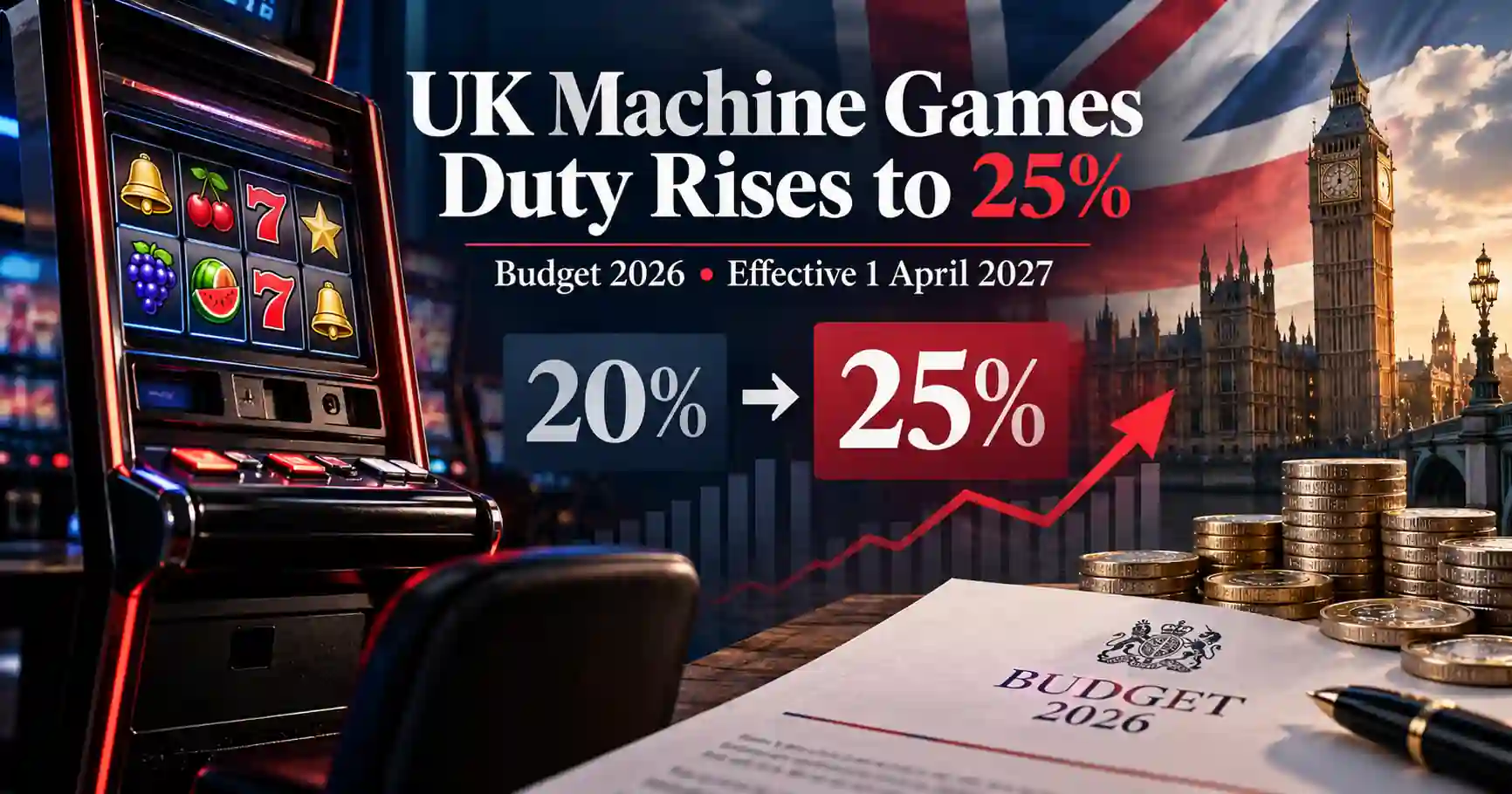
UK Chancellor John Healey's Budget on 28 October 2026 delivered the Machine Games Duty rise operators had dreaded, lifting the rate on higher-stake gaming machines in betting shops, casinos, bingo halls and adult gaming centers from 20% to 25% from 1 April 2027, well short of the 40% some had sought. Machine Games Duty (MGD) is the tax HM Revenue & Customs (HMRC) charges on net takings from gaming machines in Great Britain and Northern Ireland.
Healey said the change would apply to higher-stakes machines while "protecting pubs and seaside arcades," according to iGaming Business. The government says the money supports a wider package for high streets.
What changes and when
The rise covers machines with a maximum stake above £1 or a maximum prize above £100, which in practice means the Category B machines found in bookmakers, casinos and bingo venues. HM Treasury's Budget 2026 policy costings confirm the rate on those machines moves from 20% to 25%. Lower-stake machines are unaffected.
| Measure | Detail | Start |
|---|---|---|
| MGD rate on higher-stake machines | 20% to 25% (stake above £1 or prize above £100) | 1 April 2027 |
| MGD on lower-stake machines | Unchanged | — |
| MGD liability for profit-share machines | Moves from venue to machine supplier | 1 April 2028 |
| Business rates relief | Removed for adult gaming centers and vape shops | 1 April 2027 |
MGD already had a 25% band: since 1 March 2015, machines where a single play can cost more than £5 have paid that rate, according to HMRC's original information note. The Budget in effect pulls a much wider group of machines up to the top rate.
The second MGD measure is administrative. Where a supplier owns a machine and shares its takings with the venue, the supplier rather than the pub tenant or permit holder will account for the duty. Venues that own a machine outright or rent it for a fixed fee stay liable.
What the Treasury expects to raise
The Treasury forecasts the rate rise will bring in about £135 million in 2027-28 and £130 million a year through 2031-32. The supplier change adds £20 million in 2028-29, falling to £10 million by 2031-32, mainly from fewer late and missed payments.
Those figures already allow for a sizable reaction. The costing assumes operators pass part of the rise on by lowering return to player, uses a demand elasticity of -0.95, and assumes 25% of the lost machine stakes move to online gaming. It also books a small loss in Corporation Tax as affected companies earn less. The Treasury names that behavioral response as the main uncertainty. Intergame reported a separate Office for Budget Responsibility figure of about £100 million a year.
Why 40% was on the table
The idea of doubling the duty came from the Social Market Foundation, a think tank that proposed a steep MGD rise in June 2026. About 90 Labour MPs wrote to the Chancellor asking for a higher rate on Category B machines, according to Gambling.com. iGaming Business notes that the 40% figure came from that campaign, not from Treasury plans.
The industry fought hard in the weeks before the Budget. Six operator chief executives wrote to the Chancellor on 14 October, and the Betting and Gaming Council (BGC), the main trade body for licensed UK betting and gaming firms, warned on 21 October that "higher taxes do not automatically mean higher revenues." According to iGaming Business, the BGC pointed to EY modeling in which a doubled rate put as many as 16,000 jobs at risk, along with almost 1,500 bookmakers and 34 casinos.
Industry reaction: jobs and the illegal market
Relief that the worst case was avoided was short-lived. BGC chief executive Grainne Hurst called it a "deeply damaging decision" for workers and communities, Intergame reported. The BGC said more than 600 betting shops have closed or announced closure since the 2025 Budget, and that more than 11,000 online and retail jobs have been lost or put at risk.
Operator comments, as reported by the trade press:
- Rank Group chief executive Richard Harris said any increase would mean "venue closures and job losses" (iGaming Business).
- JenningsBet chief executive Greg Knight said: "I certainly don't think it's a win" (iGaming Business).
- Buzz Bingo's Sarah Calakovic had warned that a five-point rise could push around 40% of its venues into losses, citing BBC reporting (iGaming Business).
- Entain expects about £25 million in extra yearly costs across its UK and Ireland retail estate before mitigation (Intergame).
- Betfred co-owner Fred Done had said a rate near 40% would lead to the closure of nearly 1,300 shops (NEXT.io).
Advisers focus on the black market. Ismail Vali of Gaming Compliance International told iGaming Business that the unlicensed share of UK online gaming revenue was 0.43% in 2020 and is estimated to have reached 9% by late 2025. These are his figures, not the Gambling Commission's. Bryn Reynolds, a tax partner at Pinsent Masons, said the smaller rise "will still intensify existing pressure" on operators and could erode the tax base if shops close.
British racing is also exposed, since many horse-race bets are placed in retail shops that depend on machine income. Intergame cited Arena Racing Company (ARC) estimates that shop closures have already cost the sport £17 million in levy and media rights.
How it follows the 40% Remote Gaming Duty
The machine tax rise comes on top of the online tax increases from the November 2025 Budget, when Rachel Reeves was Chancellor. HMRC's policy paper of 26 November 2025 set out the package:
| Duty | Old rate | New rate | Start |
|---|---|---|---|
| Remote Gaming Duty (online casino, slots, bingo) | 21% | 40% | 1 April 2026 |
| General Betting Duty, remote bets (non-racing) | 15% | 25% | 1 April 2027 |
| Bingo Duty | — | Abolished | 1 April 2026 |
| Machine Games Duty, higher-stake machines | 20% | 25% | 1 April 2027 |
That earlier package grew out of the consultation on a single remote betting and gaming duty, which in the end kept separate duties but raised the rates. It reversed the relief operators felt in 2024, when gambling shares rallied after Reeves left taxes alone. NEXT.io links the 40% Remote Gaming Duty to job cuts, including Flutter's plan to cut up to 16% of its UK and Ireland workforce.
The two rises are now linked in the Treasury's own math: part of the money lost on machines is expected to come back through Remote Gaming Duty, now taxed at 40%.
What operators face next
Retail operators have about five months before the new rate starts on 1 April 2027, the same day General Betting Duty on online bets rises. Expect more estate reviews and machine cuts, plus continued lobbying over gaming machine standards and the cost of new rules such as financial risk checks. The rate change still has to be written into law, normally through the Finance Bill that follows a Budget.
Status reviewed on 29 October 2026. Rates, dates and revenue figures are from HM Treasury's Budget 2026 costings and HMRC; industry figures are attributed to the outlets that reported them. More legislation news and EMEA coverage.
Frequently asked questions
What did the UK Budget change about Machine Games Duty?
The Budget on 28 October 2026 raised Machine Games Duty from 20% to 25% for machines with a maximum stake above £1 or a maximum prize above £100. The change takes effect on 1 April 2027. Rates for lower-stake machines, typical of pubs and seaside arcades, are unchanged. A separate measure moves duty liability to machine suppliers under profit-share arrangements from 1 April 2028.
Who announced the Machine Games Duty rise?
Chancellor of the Exchequer John Healey announced it in his Budget statement on 28 October 2026, his first fiscal event as Chancellor. HM Treasury's Budget 2026 policy costings document sets out the details, including the 1 April 2027 start date and the revenue forecast for each year to 2031-32.
How much will the Machine Games Duty rise raise?
HM Treasury's costing puts the gain at about £135 million in 2027-28 and £130 million a year from 2028-29 to 2031-32. The estimate already assumes that operators cut payouts to players, that demand for machine play falls, that some play shifts online, and that Corporation Tax receipts drop slightly as affected companies earn less.
Did the UK raise Machine Games Duty to 40%?
No. The Social Market Foundation think tank had proposed roughly doubling the rate, and a group of Labour MPs pushed for a higher rate on Category B machines, which led to fears of a rise to 40%. The Budget set the new rate at 25%, a rise of five percentage points from 20%.
How does the Machine Games Duty rise relate to Remote Gaming Duty?
It follows the November 2025 Budget, which raised Remote Gaming Duty on online casino and slots profits from 21% to 40% from 1 April 2026 and set a 25% remote betting rate from April 2027. The Treasury's MGD costing assumes that a quarter of the stakes lost from machines will move to online gaming taxed under Remote Gaming Duty.


