Ksa Opens Tender for the Dutch Totalisator Monopoly on Horse Racing, With Applications Due in January 2027
The Ksa will take applications from 4 to 31 January 2027 for the single Dutch totalisator licence for land-based horse race pool betting from July 2027 to 2032.
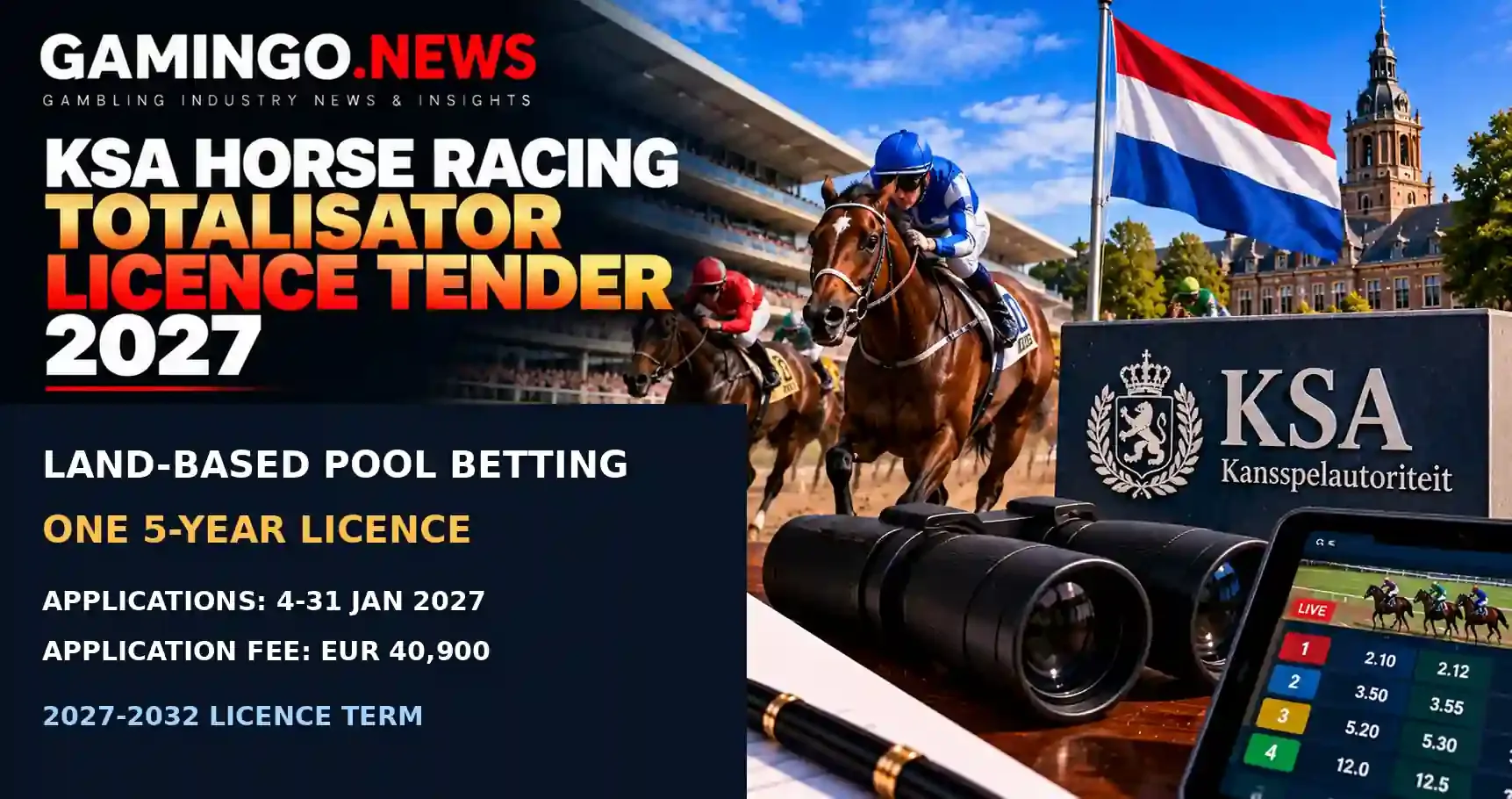
The Netherlands Gaming Authority (Kansspelautoriteit, Ksa) opened a tender on 28 October 2026 for the only Dutch totalisator licence, the statutory monopoly on land-based pool betting on horse and trotting races, and will take applications from 4 to 31 January 2027 for a five-year term from 1 July 2027 to 30 June 2032. The current holder, ZEbetting & Gaming Nederland B.V., keeps the license until 30 June 2027.
A totalisator, or tote, is pool betting: all stakes on a race go into one pot, the operator takes its share, and the rest is divided among winning tickets. Under the Dutch Betting and Gaming Act (Wet op de kansspelen), only one company may offer it at racecourses and in physical outlets.
The timetable and the fee
The Ksa expects to post the application form and a model license on its website in December 2026. The window then runs for four weeks.
| Step | Date or amount |
|---|---|
| Tender announced | 28 October 2026 |
| Application form and model license published | December 2026 (expected) |
| Application window | 4 to 31 January 2027 |
| Processing fee (paid in advance, non-refundable) | €40,900 |
| Current license expires | 30 June 2027 |
| New license term | 1 July 2027 to 30 June 2032 |
The fee is up from €32,000 in the last procedure, which opened in October 2021, an increase of about 28%. The regulator describes the process as open and transparent.
How the winner is chosen
The Ksa runs the award in two phases, the same structure it used last time.
In the first phase, each application is checked against the legal requirements and public interest tests. These cover legal form and place of establishment, continuity, internal supervision and reliability, integrity and outsourcing policies, incident handling, prevention of excessive gambling, addiction and gambling harm, keeping minors out, and a match-fixing policy. Applicants must also show proven experience with offline sports betting.
In the second phase, used only if more than one applicant passes, a notary picks the winner in an unweighted draw, so each qualifying applicant has an equal chance. If only one applicant passes, no draw takes place and that applicant receives the license.
The 10% contribution to racing
The license carries an obligation to fund the sport. The holder must pay 10% of its monthly gross gaming revenue from bets on horse and trotting races held in the Netherlands to the Dutch horse racing sector. For Dutch tracks, which depend on tote turnover, the contribution is a significant part of the business case for keeping the monopoly in place.
The incumbent and what is out of scope
ZEbetting & Gaming Nederland is the Dutch subsidiary of ZEturf, the French online racing and sports betting group. It held the tote contract before 2022 and kept it after the Ksa's 2021 procedure, which covered on-course betting at Dutch tracks including Victoria Park Wolvega, Drafbaan Groningen, Drafcentrum Alkmaar and Renbaan Duindigt. iGaming Business reports that the group also operates in France, Belgium and Malta.
The tender does not cover online betting on horse racing. Online racing bets fall under the separate remote gambling licensing system introduced in October 2021 by the Remote Gambling Act (Wet kansspelen op afstand). The Ksa has acted against licensed operators that stepped outside those rules, as when it warned an operator over unlicensed harness racing betting.
Monopolies under pressure
The tote is one of several Dutch gambling monopolies that have faced questions since the online market opened. A Dutch court in 2024 questioned whether the lottery monopoly could be justified under EU law once private online operators were licensed. The Ksa is also changing how land-based venues are authorized, with a new fixed-term exploitation licence for gaming venues. The new tender keeps the single-operator model for racing but puts it up for competition every five years.
The announcement came a day before the Ksa published market data showing Dutch licensed gambling revenue fell to €4.1 billion in 2025, with land-based betting one of the few segments that grew.
What happens next
Interested companies should watch for the application form in December. Applications close on 31 January 2027, and the winner needs to be in place before 1 July 2027, when the current license ends. The Ksa has not said whether it has received expressions of interest from operators other than ZEbetting.
Status reviewed on 30 October 2026. Dates, the fee, criteria and the 10% contribution are from the Ksa's announcement as reported by Gaming.net and iGaming Business; the 2021 fee is from SBC News, and the Ksa page itself could not be accessed for this story. More regulation news and EMEA coverage.
Frequently asked questions
What is the Dutch totalisator licence?
It is the single license that allows one operator to run pool betting, where all stakes go into a shared pot divided among winners, on horse and trotting races in the Netherlands through land-based channels such as racecourses and betting shops. The Betting and Gaming Act makes it a statutory monopoly. Online horse race betting is separate and falls under the remote gambling licenses introduced in 2021.
When can companies apply for the Dutch totalisator licence?
The Netherlands Gaming Authority (Ksa) will accept applications from 4 January to 31 January 2027. It expects to publish the application form and a model license on its website in December 2026. Applicants pay a €40,900 processing fee in advance, and the fee is not refunded if the application fails. The new license starts on 1 July 2027 and runs until 30 June 2032.
How will the Ksa choose the winner?
The procedure has two phases. In the first, the Ksa checks each application against legal and policy requirements, including reliability, integrity and outsourcing policy, incident handling, measures against gambling harm and underage play, match-fixing policy and proven experience with offline sports betting. If more than one applicant passes, a notary picks the winner in an unweighted draw. If only one passes, that applicant gets the license.
Who holds the Dutch horse racing betting monopoly now?
ZEbetting & Gaming Nederland B.V., the Dutch arm of the French ZEturf group, holds the current totalisator licence. It won the previous five-year term, which started on 1 July 2022, after a similar Ksa procedure in 2021 and 2022. That license expires on 30 June 2027. The company can apply again in January 2027 on the same terms as any other applicant.