
EMEA
A 1% EU iGaming Levy? Brussels Just Put Online Gambling on the Budget Menu

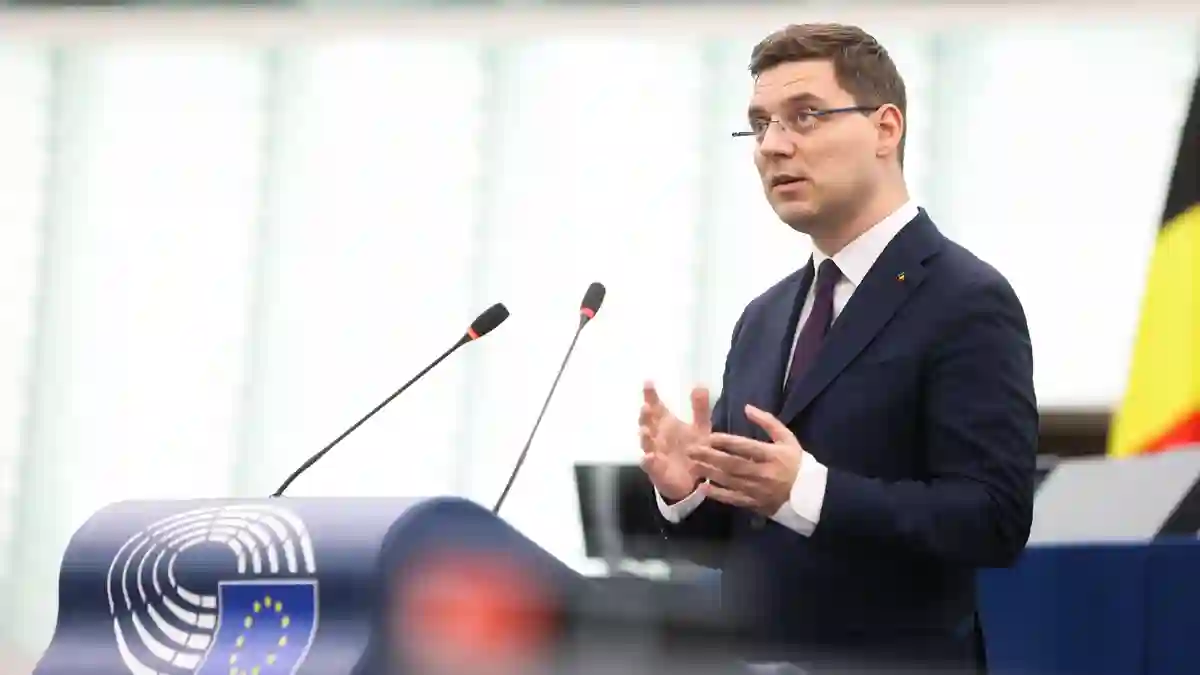
If you operate in Europe, you’ve just been volunteered for a new conversation: funding the EU budget—one bet at a time. Victor Negrescu, Vice-President of the European Parliament (S&D), is backing an idea for a harmonized EU-level levy on online gambling and betting, positioned as “own resources” for the EU—without “taxing citizens” or squeezing national budgets. On paper, it sounds politically elegant: take a fast-growing cross-border digital sector, add a small EU levy, then earmark the money for education, youth initiatives, prevention, addiction treatment, and mental health. But before anyone updates their pricing models, here’s the operator-grade reality check: the tax base is unclear, the numbers are debated, and the EU decision-making hurdles are brutal. Key points for operators (the bits that actually matter)
- Expect regulatory signalling, not immediate implementation. The political debate matters even if the measure stalls.
- Watch the tax base like a hawk: GGR vs turnover vs profits changes everything.
- Budget earmarking is the persuasion tool. Tying it to education/youth/mental health makes the levy more saleable.
- Unanimity risk is real. One or two resistant Member States can freeze it.
- Compliance asymmetry is the biggest operational risk. If enforcement doesn’t rise with taxes, black market share can rise too.
EU iGaming Tax Proposal: Negrescu’s 1% Levy Plan to Fund Education
What’s being proposed (in plain operator language)
Negrescu’s concept is a fixed EU-level levy on online betting and gaming operators, described as sitting on top of existing national turnover/GGR regimes (unless a coordination mechanism appears later). He also links the idea to a second pillar: stronger EU-level action against illegal/unlicensed platforms targeting EU consumers—because, politically, it’s a much easier sell if the compliant sector isn’t the only one paying.
Why this idea is getting oxygen now
Two drivers keep showing up in the commentary:
- EU money pressure (the “own resources” problem). EU budget discussions repeatedly return to the same friction point: ambitions grow, but funding tools remain constrained and politically sensitive.
- Tax fragmentation inside the single market. Online gambling taxes across Europe remain national, and the spread is wide—often cited as roughly ~5% to ~40% depending on jurisdiction and tax base. Critics argue this distorts competition and nudges location/structuring decisions toward “friendlier” tax environments.
The money claim: “tens of billions” or… a few billion?
This is where I immediately switch into “show me the base” mode. Some discussions cite internal estimates that the online gambling and betting sector generated ~€130bn (2022), perhaps nearing ~€200bn today, and therefore argue that a 1% levy could produce “tens of billions”. However, industry reporting often uses GGR (gross gaming revenue), and for Europe you see materially smaller numbers. For example, EGBA’s “Key Figures 2022” (EU-27 + UK online markets) puts online GGR at ~€38.2bn in 2022. So, depending on what policymakers mean by “revenue” (GGR vs. handle/turnover vs. something else), a 1% levy could look like:
- If applied to online GGR: 1% of ~€38.2bn ≈ €382m (not “tens of billions”).
- If applied to a broader “industry revenue” measure (~€130bn): 1% ≈ €1.3bn.
- If applied to betting turnover/handle (much larger): you can reach multi-billion outcomes, but then you’re effectively proposing a turnover-style tax, which is where channelization goes to die in high-tax markets.
Notably, Romanian press coverage around this proposal also floated a more grounded magnitude (e.g., up to ~€4bn annually), which implicitly suggests a specific base/rate assumption—again, not yet formalized. My take: until Brussels defines the taxable base, every headline number is marketing.
The hard blocker: the EU doesn’t “just add a new tax”
Even supporters admit the politics and procedure are steep:
- Tax harmonization at EU level typically requires unanimity in the Council under special legislative procedures (the Parliament is consulted, but it doesn’t “own” taxation).
- If framed as an EU “own resource”, changes usually require unanimous Member State agreement and national ratification procedures.
In other words, a single Member State with a strong iGaming footprint—or a strong “tax sovereignty” reflex—can slow-walk or block the whole thing.
The enforcement paradox: tax the licensed, reward the unlicensed
This is the operator nightmare scenario: If the EU stacks an extra levy on top of national taxes without simultaneously improving enforcement against offshore/unlicensed supply, it risks widening the price gap between licensed and unlicensed offers. DLA Piper explicitly flags this competitive imbalance risk. Also, the EU has historically left gambling regulation largely to Member States, with no full harmonization at Union level—meaning enforcement capacity still sits heavily at national level. So yes, the proposal gestures at an EU directive against illegal platforms, but the practical question remains: who enforces, with what tools, and against whom?
Reality check from the market: taxes are already rising
This isn’t happening in a vacuum. Several jurisdictions have already tightened the screw:
- Sweden moved from 18% to 22% GGR tax effective 1 July 2024 (per reporting on the government proposal).
- France introduced new betting/gaming tax measures effective 1 July 2025, with companies publicly reporting material impact.
- Estonia had a legislative wording issue that effectively exempted online casinos from tax at the start of 2026, and lawmakers moved to fix/clarify the regime (commonly referenced around 5.5% for certain remote games).
When policymakers add “just one more percent,” operators don’t experience it as “just one more percent.” They experience it as margin compression, bonus recalibration, product repricing, and—if the market is fragile—lower channelization.
My analytical opinion (friendly, but direct)
I understand why this idea is attractive in Brussels: it’s a cross-border digital sector, it’s politically easy to frame, and it can be packaged as “harm reduction funding.” However, I don’t buy the “tens of billions from 1%” headline unless they quietly mean a turnover-style base—which would be commercially disruptive and, in some markets, self-defeating. The EU also doesn’t have a clean institutional runway here: unanimity and ratification dynamics alone make this a long game. So, I treat this as a policy signal more than a near-term invoice. Still, signals matter: they shape investor expectations, licensing roadmaps, and the next cycle of “responsible gambling funding” politics across Member States.
Conclusion
Victor Negrescu’s call for a harmonised EU tax on online gambling is less about “1%” and more about direction of travel: Brussels is testing whether iGaming can evolve from a nationally-taxed product into a contributor to EU-level priorities like education, youth initiatives, and harm prevention. Yet, because gambling taxation remains nationally controlled and EU-wide tax moves typically demand unanimity—and often national ratification—this proposal faces heavy structural resistance. If the debate continues, the outcome will hinge on three make-or-break details: (1) the tax base, (2) how it interacts with national regimes, and (3) whether enforcement against unlicensed operators scales up at the same time. Without that trio, an EU levy risks becoming a tax on compliance—exactly the kind of policy that looks good in a speech but plays badly in the market. Tags: EU regulation, iGaming taxation, online betting, compliance, EU budget, responsible gambling, black market, licensing
📢 Join the Conversation!
Want to share your thoughts or ask questions about our latest articles? Stay connected and be part of the discussion by joining our Telegram and WhatsApp channels!
🔹 Get real-time updates
🔹 Share insights with industry peers
🔹 Ask questions & get expert answers
👉 Join us on Telegram 👉 Join us on WhatsApp
Let’s keep the conversation going!



Lagos Just Taxed the Moment of Joy with 5%

France Switches On JONUM

Malaysia’s Next Anti-Gambling Law

Spain’s iGaming “Reset” in 2026

Maine Moves to Ban Sweepstakes Casinos

Nigeria’s Gambling Standoff: 2026 Could Finally Deliver a “Playable” Rulebook

Poland’s “Protective” Monopoly Isn’t Stopping the Black Market — It’s Capping Control

A 1% EU iGaming Levy? Brussels Just Put Online Gambling on the Budget Menu

Armenia Gambling Law Reform

Greece Tightens Illegal Gambling Laws

Michigan Gaming Board Seizes Illegal Gambling Machines in Saginaw

Curacao’s Online Gambling Industry in Limbo: Parliament Rejects LOK Law

Global Gaming Awards EMEA: Celebrating Industry Excellence in London

The rules for suspension of gambling licenses in Ukraine are set to undergo reform

San Diego Padres pitcher Joe Musgrove has extended his partnership with Sycuan Casino

Las Vegas Strip Revenue Surges to $712.4M in February

Betsson has obtained its third regional license in Argentina

Hard Rock Lake Tahoe will be acquired by Fertitta Entertainment

White Hat Studios launches online casino products in Pennsylvania in partnership with Caesars
