
Namibia Pushes Gambling Reform and Real-Time Monitoring While Its Regulator Is Still Hiring
Namibia is finalizing new gambling and lottery fees and tendering a real-time monitoring system, but its Gambling Board is still short of staff.
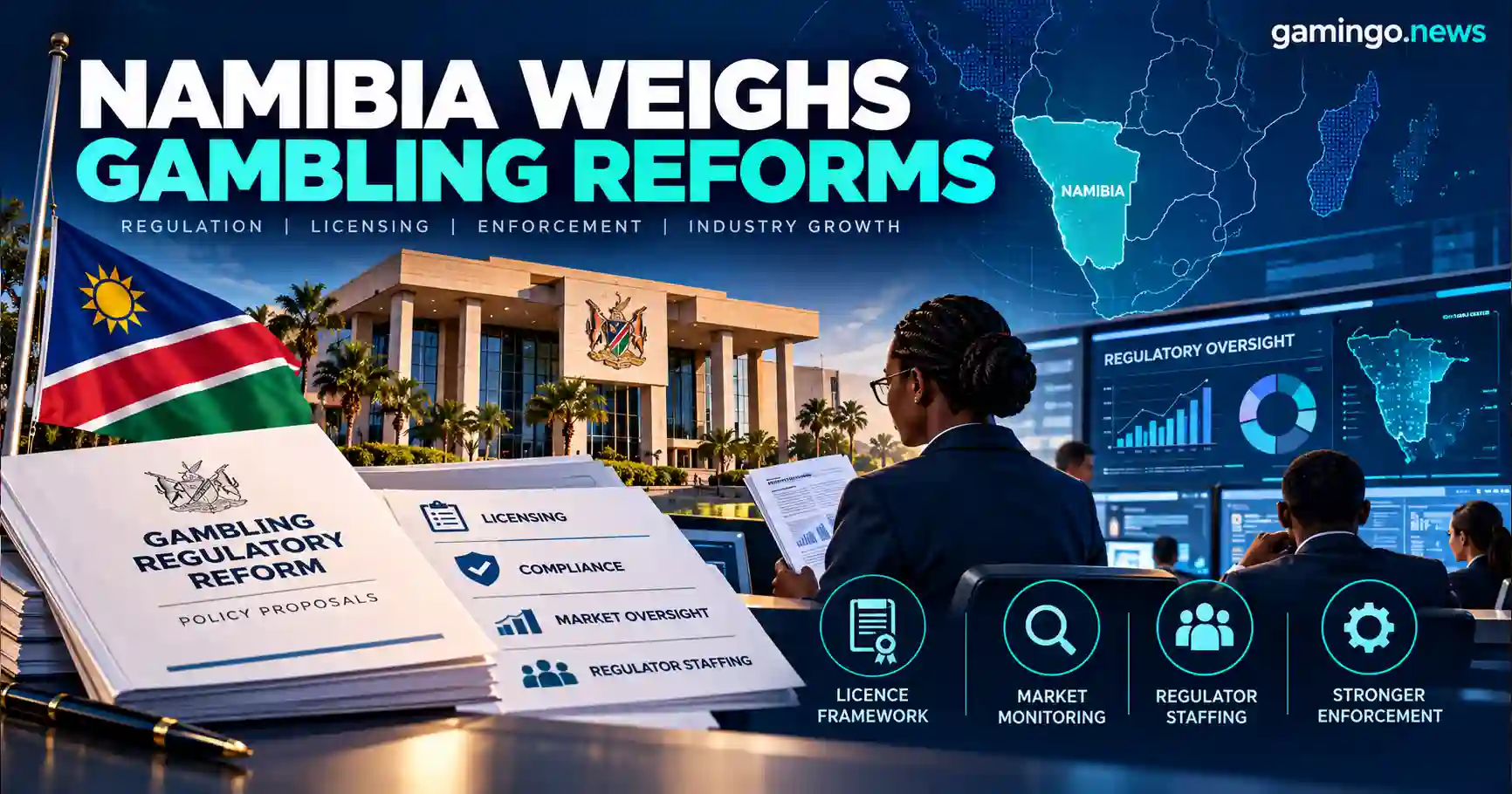
Namibia is close to finalizing new gambling and lottery rules, including fees to pay for a national real-time monitoring system. But the regulator meant to run that system is still hiring. The proposals are not law yet: the ministry has finished consulting and will gazette the final text later.
The Ministry of Environment, Forestry and Tourism (MEFT) held regional validation workshops from 5 to 14 October 2026 on amendments to the Lotteries Regulations and the Gambling and Gambling Activities Regulations. They followed an earlier round of consultations from 24 March to 9 April. Submissions will now be consolidated in Windhoek before the rules are gazetted.
The capacity gap is the harder problem. Environment minister Indileni Daniel told parliament this month that the Gambling Board of Namibia (GBN) is not yet fully operational and that staff still have to be recruited. "Effective regulation, especially for online gambling, is currently a challenge at the moment," she said.
The reform at a glance (23 October 2026)
| Item | Status |
|---|---|
| Legal basis | Gaming and Entertainment Control Act 2018 (Act 13 of 2018); Lotteries Act 2017 |
| Regulation amendments | Validated in six regional workshops, 5–14 October 2026; awaiting gazetting |
| Proposed monitoring fee | 5% of net monthly income |
| Proposed maintenance fee | 1% of gross income |
| Existing levy (2021 regulations) | 10% of net monthly income for casinos, gambling houses, bars and shebeens; 10% of gross monthly takings for totalisators |
| Monitoring system (CEMS) | Tender SC/RP/GBN-01/2026, now closing 5 November 2026 |
| Licensing platform | Tender SC/RP/GBN-02/2026, 60-month contract, now closing 5 November 2026 |
| Regulator leadership | Acting chief executive Johannes Erastus; chairperson Ben Shikongo |
| Bookmaker and totalisator applications | Under investigation and technical assessment; no start date announced |
What the draft rules would change
The amendments, as presented in the workshops, cover fees, licensing and digital gambling:
- Monitoring and maintenance fees. A 5% fee on operators' net monthly income and a 1% fee on gross income, both to support the Central Electronic Monitoring System (CEMS).
- Application and registration fees by category. Lower fees for bars, shebeens and gambling houses, and higher application fees for bookmakers and totalisators. Figures reported during the April consultations included a N$80,000 casino license application fee, N$15,000 for a gambling house and an annual casino license fee of N$100,000.
- Other charges. A 5% levy on prizes in promotional competitions and a N$2,000 processing fee.
- Digital gambling. A new electronic software lottery license for online platforms, clearer rules for digital operators, controls on underage access and restrictions for people with gambling problems.
- Gambling employees. Staff who handle money would have to register as gambling employees, a measure linked to anti-money-laundering concerns. Namibia was among the jurisdictions under increased FATF monitoring in the body's 2025 update.
- Tax data. Information sharing with the Namibia Revenue Agency (NamRA) on undeclared income from operators and winners. NamRA signed a cooperation agreement with the GBN in March; commissioner Sam Shivute said the agency would "receive data on all players in the industry and compare it with our tax records."
MEFT deputy executive director Seimy Shidute said the changes are needed to "adapt to the global developments, such as the digital innovation and emerging technological trends."
How the new 5% and 1% fees will sit alongside the existing 10% levy will depend on the gazetted text. Until then, operators should treat the new fees as budget scenarios, not confirmed liabilities.
A regulator still building its team
The Gambling Board was created by the 2018 Act to license, monitor and inspect the industry, and to run responsible gambling programs. On paper it has the powers. In practice, Daniel told parliament, staff are still to be recruited, which limits its consumer education and rehabilitation work.
Local reporting by the Namibian Sun adds that the shortage has affected oversight of gambling houses and online platforms and the collection of fees and levies. The numbers support that: the Finance Ministry's 2023/24 accountability report set a N$5 million target for gambling income levies and recorded zero collected. Daniel said N$17 million has been collected to date for the Gambling Trust Fund.
The board has started filling the gap. In July it advertised posts at its Windhoek head office, including six inspectors, two licensing officers, a legal officer, a responsible gambling manager and an ICT technician. It is led by an acting chief executive, Johannes Erastus. Chairperson Ben Shikongo has urged the government to "expedite the process of gazetting the fees, particularly those that were previously high."
Daniel also made clear what the board will not do: no applications are being considered for activity the current Act prohibits.
The pattern is familiar. Greece has just started recruiting 40 gambling inspectors because laws on paper were not shrinking its illegal market. Namibia's challenge is similar, from a much smaller base.
A real-time monitoring system, on tender
The centerpiece of the reform is the CEMS, a remote, real-time system to record and report gambling activity and transactions across licensed operations, provided for in section 90 of the 2018 Act. The idea is not new: when the Act was tabled in 2018, the government said all slot machines would have to be linked to a central system.
The GBN has two tenders open:
- SC/RP/GBN-01/2026: supply, deployment and maintenance of the central electronic monitoring system.
- SC/RP/GBN-02/2026: an automated, integrated licensing, workflow and document management system, on a 60-month contract, allowing online applications.
Public Notice 003 of 2026 moved the closing date for both from 29 October to 5 November 2026. That is a procurement milestone, not the date any new obligation starts. The government has also allocated N$26.8 million to digitalize the tourism and gaming sectors.
For suppliers, the tender raises the usual questions: security, integration with operators' systems, data protection and who may see player-level data.
Sports betting licenses in the pipeline
Licensing is moving at the same time. In September the GBN moved bookmaker and totalisator applicants to investigation and technical assessment, and on 15 October it held a regulatory workshop for them at NIPAM in Windhoek. It has not said when licensed operations can begin.
"We need to be licensed so that we can have a genuine business," Shikongo said, summing up the industry's view.
What operators should prepare
- Budget for the fees as scenarios, at 5% of net and 1% of gross income, until the gazetted text confirms them.
- Map machines and platforms that would connect to the CEMS, and the data they can report.
- Reconcile turnover, prizes and payouts now; NamRA will compare operator data with tax records.
- Prepare employee registration for staff who handle money, and review AML procedures.
- Plan for digital licensing once the new platform is live.
The next checkpoint
Two dates matter: the 5 November tender deadline, and the gazetting of the amended regulations. The first decides who builds Namibia's monitoring system; the second decides what operators pay for it. Neither will matter much unless the Gambling Board can hire the people to run it.
Namibia's reform is part of a wider push across Africa: South Africa has launched a gambling license verification portal, Nigeria is still fighting over who regulates gambling, Botswana has licensed bookmakers, Uganda created a new national regulator, and Kenya banned celebrities from gambling ads.
Status reviewed on 23 October 2026. The fee proposals are drafts; we will update this story when the amended regulations are gazetted. More regulation news and Africa coverage.
Frequently asked questions
Have Namibia's new gambling fees taken effect?
No. The 5% monitoring fee, the 1% maintenance fee and the new application fees are proposed amendments to the Lotteries Regulations and the Gambling and Gambling Activities Regulations. The ministry completed regional validation workshops on 14 October 2026 and will consolidate submissions before gazetting. Only the gazetted text will be binding.
What is Namibia's Central Electronic Monitoring System?
The CEMS is a remote, real-time system that would record and report gambling activity and transactions across licensed operators, provided for under section 90 of the Gaming and Entertainment Control Act 2018. The Gambling Board of Namibia is tendering for it under SC/RP/GBN-01/2026, with bids now due on 5 November 2026. The proposed 5% and 1% fees are meant to fund it.
Why is the Gambling Board of Namibia short of staff?
The board was created under the Gaming and Entertainment Control Act 2018, but the minister told parliament in October 2026 that it is not yet fully operational and that staff still have to be recruited. It advertised posts in July, including six inspectors and two licensing officers, and it is run by an acting chief executive. Local reporting says the shortage has affected oversight of gambling houses and online platforms and the collection of fees and levies.
What fees do gambling operators in Namibia currently pay?
Under the 2021 regulations, casino, gambling house, bar and shebeen licensees pay a levy of 10% of net monthly income (gambling income less winnings paid), and totalisator licensees pay 10% of gross monthly takings. The proposed 5% monitoring and 1% maintenance fees would come on top, subject to the final gazetted text.
Can bookmakers get a license in Namibia now?
Applications are moving. The board moved bookmaker and totalisator applicants to investigation and technical assessment and held a regulatory workshop for them on 15 October 2026 in Windhoek. It has not announced when licensed operations can start.
Does the technology tender authorize anyone to offer gambling?
No. The CEMS and licensing-system tenders are procurement processes. Offering gambling still requires a license from the Gambling Board under the 2018 Act.
- Namibia
- Gambling Board of Namibia
- Gambling Regulation
- Africa
- Licensing
- Gambling Tax
- Online Gambling
- AML
- Responsible Gambling
- Sports Betting