
Maine iGaming Launch Targets Q1 2027, but a Fourth Round of Rules Could Push It Later
Maine's regulator sees Q1 2027 as a realistic online casino launch, not a set date. Rules close for comment on Oct. 30; a fourth draft would mean delay.
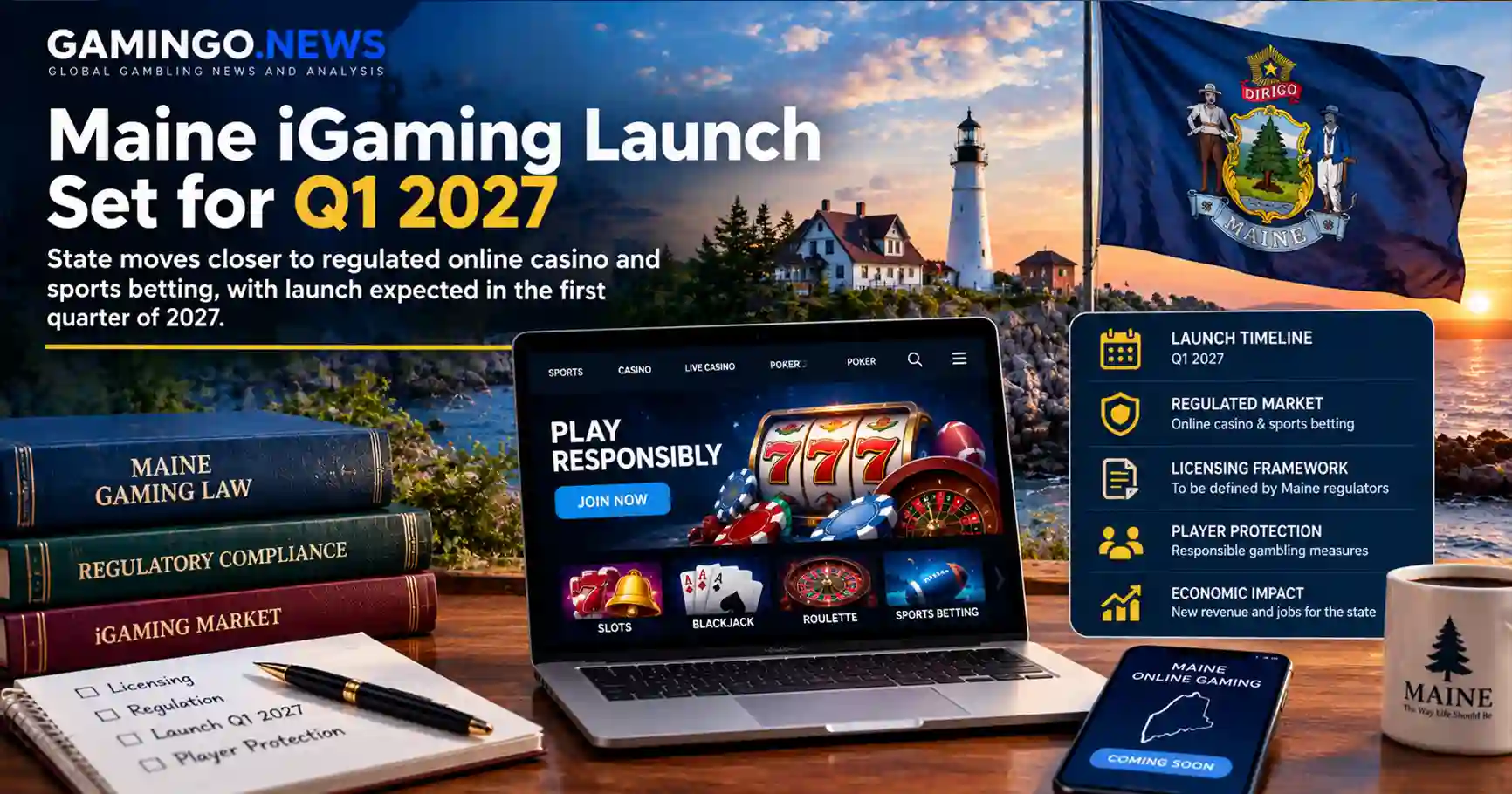
Maine could open its regulated online casino market in the first quarter of 2027, but the state has not set a launch date. The law is in force. The rules, the licensing portal and the regulator's iGaming team are not ready yet.
Milton Champion, executive director of the Maine Gambling Control Unit (GCU), says early 2027 is more practical than a launch this year, because the rules still need a legality review. He describes the first quarter as a potential window, not a firm deadline. Comments on the third draft of the rules close on 30 October 2026.
And the window may move. On 20 October Champion told a GCU meeting that if the regulator accepts any major substantive changes to the draft, the rules will go through a fourth publication, with a new comment period before approval.
For tribes, operators and suppliers the message is clear: prepare the paperwork, line up partners and build the compliance systems, but do not treat a draft as a license.
Maine iGaming at a glance (22 October 2026)
| Question | Position |
|---|---|
| Is online casino gaming legal in Maine? | Yes. LD 1164 became law on 11 January 2026 and took effect on 29 July 2026. |
| Who can operate? | Only the four federally recognized Wabanaki Nations, with approved commercial partners. |
| Is Q1 2027 a confirmed launch date? | No. It is the regulator's estimate, not a deadline. |
| When do comments on the third draft close? | 30 October 2026, 11:59 p.m. No public hearing is planned. |
| Could there be a fourth draft? | Yes, if major changes are accepted. That would add a new comment round. |
| Can businesses apply now? | No. Forms are published, but submissions open on a date still to be announced. |
| Tax rate | 18% of adjusted gross internet gaming receipts. |
| Are the operating rules final? | No. They remain a draft. |
A law on the books, not yet a market
Maine's LD 1164, An Act to Create Economic Opportunity for the Wabanaki Nations Through Internet Gaming, passed the Legislature in 2025. Gov. Janet Mills let it become law without her signature on 11 January 2026, and it took effect on 29 July. That makes Maine the eighth U.S. state to legalize online casinos, after Connecticut, Delaware, Michigan, New Jersey, Pennsylvania, Rhode Island and West Virginia.
It was not Maine's first attempt. Gamingo covered the earlier push, when lawmakers first considered exclusive tribal iGaming rights, amended the bill to support the tribal nations, and then saw the Senate weigh LD 1777 before the House voted it down in 2024.
The law gives operator licenses only to the Penobscot Nation, the Passamaquoddy Tribe, the Mi'kmaq Nation and the Houlton Band of Maliseet Indians. Each tribe can work with one commercial operator. National brands can take part as licensed management services providers or suppliers. They cannot enter Maine as independent online casinos on the strength of a license from another state.
Online casino gaming is also a separate category from sports betting, which Maine has offered since November 2023 under the same tribal model (see how Maine's betting tax revenue moves with local results). An existing sportsbook deal does not authorize casino games.
30 October is the first date to watch
The GCU published its third draft of the internet gaming rules, Chapters 70 to 84, on 30 September 2026. It covers applications and fees, internal controls, house rules, cybersecurity incident reporting, system requirements, wagers, player accounts, revenue reconciliation, geolocation, responsible gambling and advertising. Comments are limited to the language highlighted as new and close on 30 October.
What happens next depends on the regulator's response to the comments:
- No substantive changes: the rules go to the Office of the Attorney General for a legality review. Reports from October cite a review period of up to 120 days.
- Major changes accepted: the rules go through a fourth publication and another comment period. Legal Sports Report, covering the 20 October meeting, says the GCU would then have up to 120 days to adopt the rules and the Attorney General up to 150 days to approve them.
That is why Q1 2027 is a target, not a countdown. Champion has not given a timetable for a fourth round.
The licensing portal is not open
The GCU has published its internet gaming application forms so tribes, partners and vendors can prepare, but it is not accepting submissions. It will announce a start date separately.
The regulator also still needs to hire six staff for iGaming oversight and has approval for a new licensing database and portal. The draft rules distinguish internet gaming operators, management services providers, suppliers, key personnel and employees, including live dealers. Each needs its own license and background check.
Caesars is positioned with three nations
Commercial preparation is running ahead of the rules. In June, Caesars and three Wabanaki Nations, the Penobscot Nation, the Mi'kmaq Nation and the Houlton Band of Maliseet Indians, extended their sportsbook partnership to online casino gaming, subject to regulatory approval. Caesars plans to launch three brands: Caesars Palace Online Casino, Caesars Sportsbook & Casino and Horseshoe Online Casino.
The Passamaquoddy Tribe works with DraftKings on sports betting. As of 22 October no online casino partner has been publicly confirmed for the fourth license.
For suppliers, the opportunity is real but concentrated. Access runs through four tribal licenses and their operators, much as live-casino providers such as Evolution have built the US live-dealer casino business state by state.
An 18% tax, and costs beyond the license fee
LD 1164 sets an 18% tax on adjusted gross internet gaming receipts, with the revenue distributed among designated state funds. Tax rates are a moving target across the U.S.: compare New Jersey's proposed online gambling tax increase and North Carolina's plan to raise its sports betting tax to 23%.
Fees in the third draft (Chapter 72):
| License | Fee | Background investigation |
|---|---|---|
| Internet gaming operator | $50,000 | $5,000 deposit, initial and renewal |
| Management services provider | $10,000 | $10,000 initial, $5,000 renewal |
| Supplier | $10,000 | $10,000 initial, $5,000 renewal |
| Key personnel | $1,200 | $2,500 personal history and background fee |
| Employees (including live dealers) | $250 | $52 |
Investigation costs are billed at up to $250 an hour. The fees are a small part of a first-year budget: platform certification, geolocation, cybersecurity, responsible gambling tools and customer service will cost far more.
What the draft rules mean for players
The third draft puts most obligations on the technology and operations behind each casino:
- Age and location: players must be 21 or older and physically in Maine. VPNs and remote access tools are blocked.
- No credit: credit card deposits are prohibited, and operators may not extend credit. Maine also passed a law in April banning credit cards for gambling, alongside its ban on sweepstakes casinos. Colorado took a similar step with new rules on credit cards and aggressive ads.
- Player funds: operators must keep player money in a segregated account, hold reserves covering player liabilities at an insured institution, and post a $500,000 bond with the GCU director as obligee.
- Self-exclusion: players can exclude themselves for one, three or five years, or for life. Exclusions will run through a third-party, real-time automated system shared by all operators.
- Advertising: marketing aimed at people under 21 is restricted, and ads must state that gambling under 21 is unlawful. According to the regulator's October briefing, ads must also show the beneficiary tribe's name and logo alongside the operator partner's.
- Testing: games and systems need certification by an independent lab approved by the director, under the GLI-19 standard for interactive gaming systems.
These are draft requirements. Some may change before the rules are adopted.
Live-dealer games can come from outside Maine
One change in the third draft matters for platform design. Live-dealer studios may operate outside Maine if the director approves the studio address, and the earlier requirement to keep backend systems in the state has been dropped. But the primary server that accepts and stores live-dealer wagers must stay in Maine.
Operators also no longer need separate approval for routine game updates. A setup built for New Jersey or Michigan will still need checking against Maine's server-location and certification rules before launch.
A lawsuit over tribal exclusivity is pending
In January 2026, Churchill Downs and its Oxford Casino Hotel, about 35 miles north of Portland, sued the state in federal court. They argue the tribal-exclusive model is unconstitutional, calling it a "monopoly law." The four Wabanaki Nations joined the case as defendants in April. Both sides have filed for summary judgment, and a ruling is pending.
The lawsuit does not suspend the law. But a ruling, either way, could shape the market. No operator should build a Maine plan on the assumption that the law will fall, or that the case does not matter. The dispute echoes the long-running debate over legalizing iGaming in the US, where land-based casinos often oppose online expansion.
What happens next
Three milestones matter more than any launch prediction:
- 30 October 2026: comments close on the third draft.
- Fourth publication or legal review: the GCU decides whether the changes are substantive. A fourth round means new comments; otherwise the rules go to the Attorney General.
- Licensing: the portal opens, the GCU hires its six staff, and operators, suppliers and systems are approved and certified.
Q1 2027 may still be achievable. It is not a date the regulator has set. In the meantime, other states are moving: Massachusetts, Virginia, Indiana and Arkansas have all debated online casino bills.
For the Wabanaki Nations and their partners, the edge in Maine may not come from the biggest marketing budget. It may come from the most complete application and the platform best prepared for the final rules.
Regulatory status reviewed on 22 October 2026. Draft rules and launch timing can change; we will update this story when the Gambling Control Unit decides on a fourth publication or opens applications. Follow more regulation news and North America coverage.
Frequently asked questions
When will online casinos launch in Maine?
There is no official date. Maine Gambling Control Unit director Milton Champion describes the first quarter of 2027 as a realistic window, not a deadline. The rules still have to be finalized and approved by the Attorney General, and the regulator has to hire staff and open its licensing portal. If the third draft of the rules changes substantially, a fourth comment round would follow and the launch could slip further.
Is online casino gambling legal in Maine?
Yes, in law. LD 1164 became law on 11 January 2026 and took effect on 29 July 2026. But no operator is licensed yet: the rules are still in draft and the Gambling Control Unit is not accepting applications.
Who can operate online casinos in Maine?
Only Maine's four federally recognized Wabanaki Nations: the Penobscot Nation, the Passamaquoddy Tribe, the Mi'kmaq Nation and the Houlton Band of Maliseet Indians. Commercial companies can take part as licensed management services providers or suppliers working with a tribe, not as independent operators.
When can companies apply for a Maine iGaming license?
Not yet. The Gambling Control Unit has published its application forms so tribes, partners and vendors can prepare, but it will only accept submissions from a start date it has not yet announced.
What are the tax rate and license fees for Maine online casinos?
The law sets an 18% tax on adjusted gross internet gaming receipts. Under the third draft of the rules, an operator license costs $50,000, management services provider and supplier licenses $10,000 each, plus background investigation deposits. Operators must also post a $500,000 bond.
Can Maine online casinos accept credit cards?
No. The draft rules prohibit credit card deposits into internet gaming accounts, and a Maine law signed in April 2026 bans credit card use for gambling.
Can live-dealer studios be outside Maine?
Yes, under the third draft, if the regulator approves the studio. The primary server that accepts and stores live-dealer wagers must still be located in Maine.
Is the Maine online casino law being challenged in court?
Yes. Churchill Downs and its Oxford Casino Hotel sued the state in federal court in January 2026, arguing that tribal exclusivity is unconstitutional. The Wabanaki Nations joined the case as defendants in April. Both sides have asked for a decision without trial, and a ruling is pending. The law remains in force while the case continues.
- Maine
- Igaming
- Online Casino
- US iGaming
- Tribal Gaming
- Wabanaki tribes
- Milton Champion
- Caesars
- DraftKings
- Gambling Regulation
- Responsible Gambling
- Live Dealer


